My story
Hands, material, passion

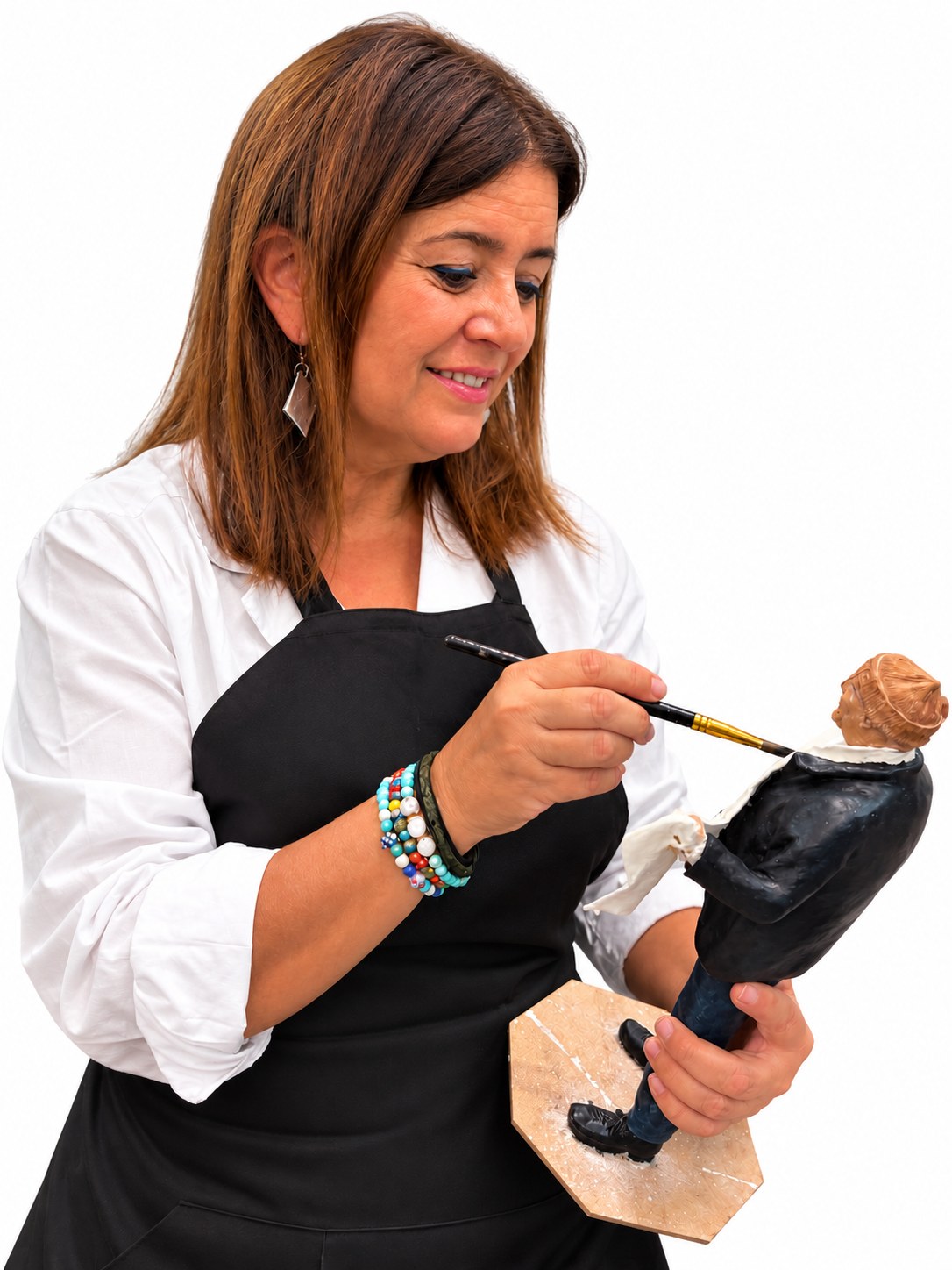
First terracotta, today above all papier-mâché. A journey of passion, experience and creativity that has made Stefania one of the most appreciated artisans in the world of Salento papier-mâché.

It all began almost by chance, in 2000, in a workshop devoted to the restoration of statues. That is where Stefania first approached papier-mâché, starting almost as a game with the restoration of a statue of Our Lady of Mount Carmel, made for some dear friends.

The years spent in the workshops of baroque Lecce allowed her to gain a deep knowledge of the materials, techniques and secrets of making papier-mâché statues. Over time, this experience grew into the desire to create and give space to her own artistic sensibility.

Since then, technique and creativity have come together in every one of her works: handmade statues and objects that convey warmth, character and emotion, bringing a small piece of Salento craftsmanship and tradition into any space.
Hands, material, passion
The papier-mâché tradition

The origins of Lecce papier-mâché date back to the eighteenth century, when the growing number of churches and monuments in Salento created the need for affordable materials to make sacred works.

It was in this period that paper, together with simple materials such as straw, rags, glue and plaster, became a material for art. A technique humble in its materials but extraordinary in its possibilities, which made it possible to create statues, decorations and great works still preserved today in the churches and monuments of Salento.

Over the centuries the craft has remained bound to tradition. The paper is turned into a pulp that, through several stages of working and modelling, takes shape over the structure of the piece. Once dry, the surface is finished and painted, giving life to light, expressive figures rich in detail.

After a period of decline, in recent years papier-mâché has been rediscovered, finding a place not only in sacred art but also in craftsmanship and decoration.

Today Lecce and Salento are still one of the main points of reference for this ancient art, which keeps renewing itself through new forms and interpretations: from Nativity scenes to characters, from statues to home décor and custom creations.

An ancient tradition that lives on thanks to the hands of artisans and the passion of those who choose to hand it down.

The technique

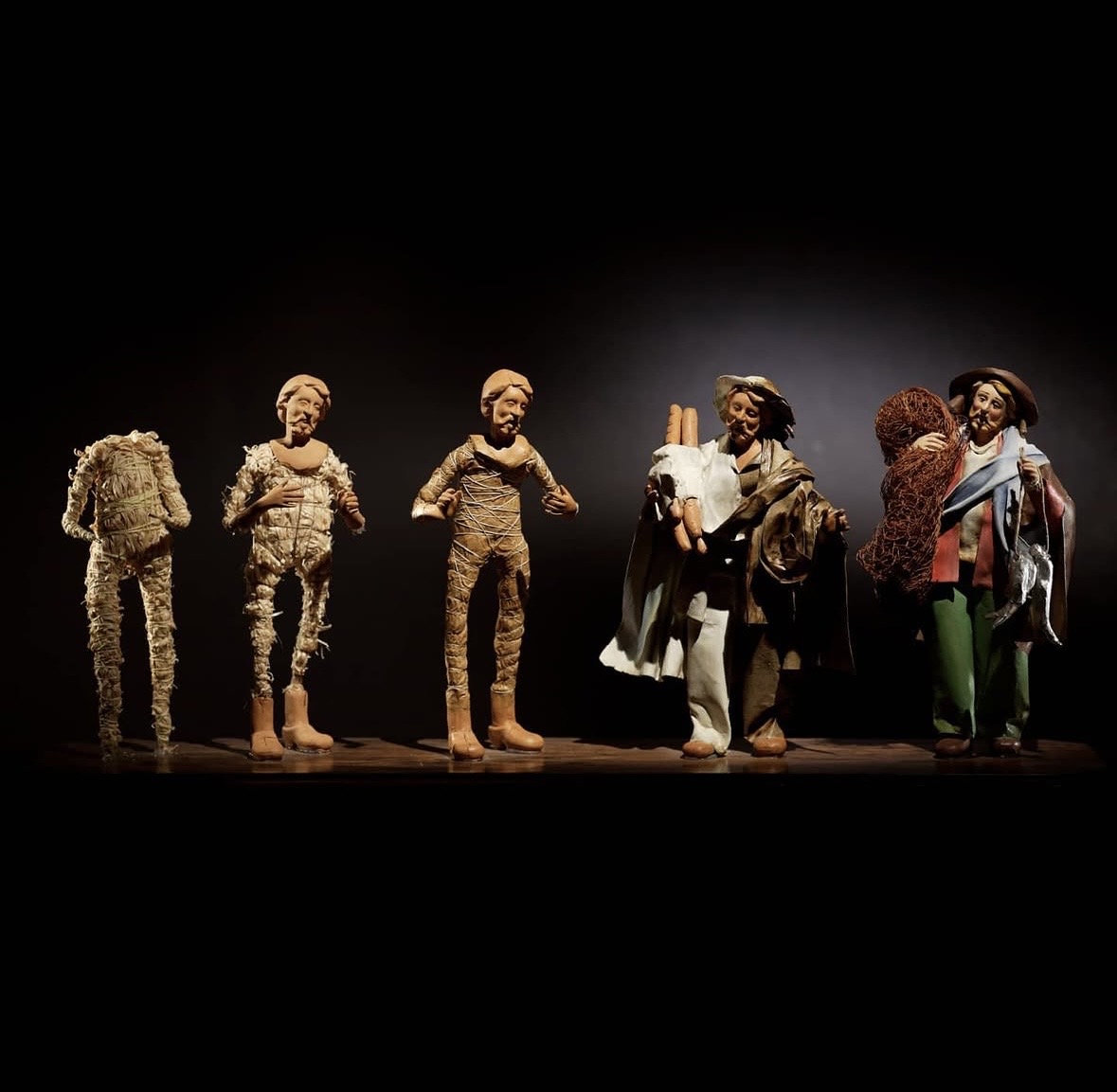
Every statue is born slowly, starting from the hands, the feet and the head. These parts are modelled in clay and then fired at about 1,000 °C, just as is done for ceramics.

An iron frame is then built and wrapped and padded with straw to support the figure. The frame is then covered with paper and left to dry. It is from this moment that the statue truly begins to take shape.

Next comes the definition of the anatomy and then the draping, a particularly important stage. This is where Stefania works with the greatest freedom, choosing shapes, volumes and details to give the figure the character she wants.

When the paper is dry, it is time for the fire-shaping (fuocheggiatura). Using heat, the surface is modelled and sculpted again until it reaches the desired form.

It is not always a linear process: sometimes more paper has to be added, left to dry and then taken back to the fire. It is work made of patience and small adjustments, until every detail finds its place.

This is how, step by step, a simple structure comes to life and becomes a statue.

Production times depend on the subject, the size and the complexity of the work.

The technique